
Go Hero Go — Roguelike RPG
Puzzle Point LtdAdventure
4.464.00 Reviews
- Version
- 0.1.28
- Installs
- 100.00K
- Age Rating
- Everyone
Screenshots
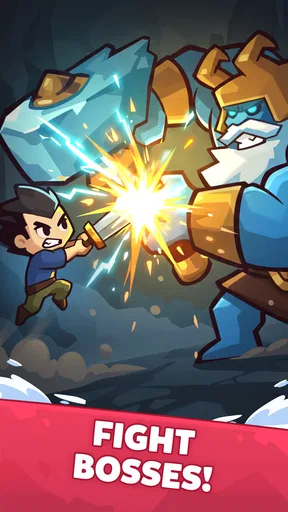
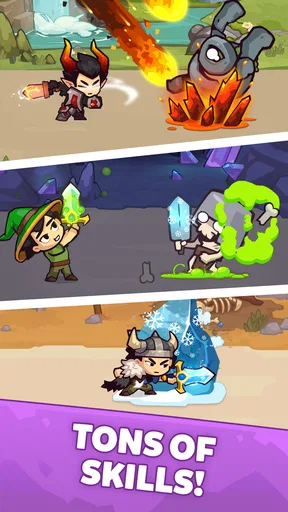
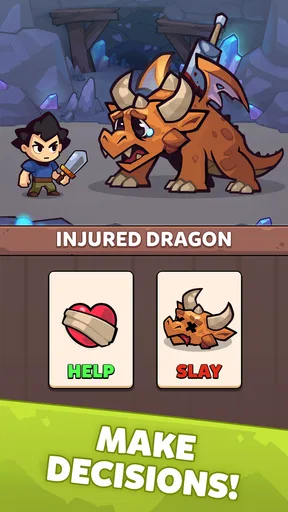
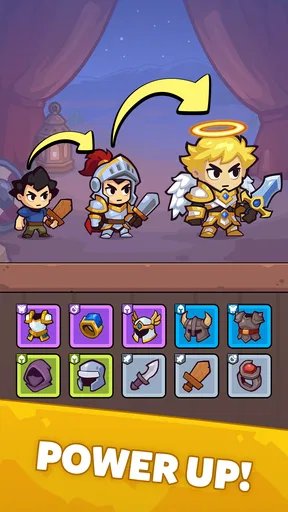
Our Review of Go Hero Go — Roguelike RPG
 Analysis by Appyee
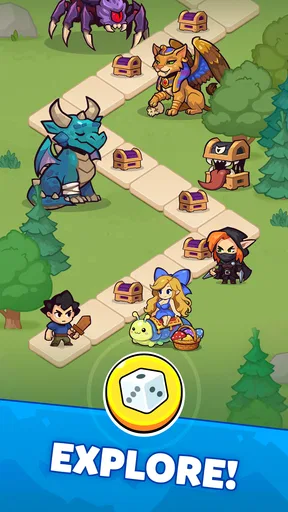
I went into Go Hero Go — Roguelike RPG expecting a light adventure game built around quick decisions, and that is the right way to approach it. Developed by Puzzle Point Ltd, it combines a magical role-playing setting with a roguelike board-game structure. The important thing is not simply that the game uses a board; it is how each move creates a small decision, gives immediate feedback, and encourages me to try one more run after the current attempt ends.
The game is free to start and carries an Everyone age rating, so it is easy to recommend as a casual download for families, younger players, or anyone who wants an approachable fantasy game rather than a complicated action RPG. It has also attracted over 100 thousand installs and holds a 4.4 average from more than 500 ratings, which suggests that the central idea has found an audience without making the experience feel intimidating to newcomers.
That said, I would not describe it as a substitute for a large, story-heavy role-playing game. Its appeal comes from short-form experimentation: act, see what happens, collect the result, lose or finish the attempt, and begin again with a better understanding of the route ahead. If that rhythm sounds satisfying, this adventure has a pleasant hook. If you want deep character management or a long uninterrupted campaign, its compact design may feel limited.
Starting with a move instead of a long tutorial
The first useful thing about the game is that it gets to its central action quickly. Rather than asking me to absorb a large collection of systems before I can enjoy myself, the board presents the adventure as a sequence of choices. I can think about the next step, commit to it, and immediately see how that decision changes the run.
That makes the opening especially suitable for players who are new to roguelike games. The genre can sometimes bury its appeal under unfamiliar terms, complicated menus, or dense explanations. Here, the board-game framing gives the experience a more readable shape. I am not merely tapping through a story; I am deciding how to move through a magical challenge and accepting the consequences of that choice.
The phrase “Go Hero Go” captures the brisk attitude of the game, but the best play is not completely mindless. I found that pausing for a moment before a move is worthwhile. A tempting immediate reward may not always be the most useful choice if it pushes the run toward a less comfortable situation. That small tension is what turns the board from decoration into the main source of play.
One practical tip is to treat the first few attempts as scouting runs. Instead of judging every early setback as a failure, I use those sessions to learn the game’s rhythm and recognize which decisions deserve more attention. This is a better approach than trying to play perfectly from the beginning, especially when the game is still teaching me how its adventure flow works.
The board-game presentation also makes the title a good fit for short breaks. I can pick it up when I have a few spare minutes, make meaningful progress through a run, and put it down without needing the same commitment demanded by a traditional console-style RPG. It works well during a commute, while waiting for an appointment, or in the evening when I want something interactive but not exhausting.
Why the first decision matters
In many casual adventure games, the opening action is little more than a gateway to the real content. Here, the first move establishes the relationship I have with the whole run. I am learning that every choice is part of a chain: one result affects the next opportunity, and the next opportunity shapes how confident I feel about continuing.
This creates a useful distinction between playing quickly and playing carelessly. The controls and presentation are approachable, but the game is more enjoyable when I give its choices a little attention. I do not need to plan several screens ahead like I would in a demanding strategy game. I do need to notice the immediate trade-off in front of me.
For younger players, that makes the game a gentle introduction to consequence-based play. For experienced roguelike fans, it may feel lighter than expected, but the simplicity has a benefit: I can focus on the run itself instead of managing a wall of information. That balance is one of the title’s strongest entry points.
The feedback rhythm keeps each run moving
Once a move is made, the game’s feedback is what determines whether the board feels alive. I get a clear sense that an action has produced a result, and that result becomes the reason to consider the next move. The cycle is pleasantly direct: choose an action, receive a consequence, evaluate the new position, and continue.
This rhythm is more important than a single spectacular moment. The game does not need every turn to feel dramatic. It needs enough response after each decision to make the next decision feel worthwhile. In my experience, that is where the roguelike structure earns its place. A run becomes a string of small questions rather than one long, passive sequence.
I particularly like the way this structure supports different moods. When I am playing casually, I can move through the board at a relaxed pace and enjoy the fantasy atmosphere. When I am more focused, I can look for patterns in the results and make a more deliberate attempt. The same basic loop supports both styles without requiring a separate mode.
There is also a useful psychological effect in the reset-based format. Because a run is temporary, a disappointing outcome does not feel like I have ruined a permanent campaign. I can absorb the information, adjust my approach, and try again. That makes experimentation less stressful than it would be in a game where every decision permanently damages a carefully built character.
My advice is to avoid tapping automatically through the feedback. The result of one action is not just a reward or setback; it is information about how the current attempt is developing. Watching that information closely helps me make better choices later, and it prevents the game from becoming a sequence of disconnected taps.
Where the simplicity helps and where it may frustrate
The straightforward feedback is a strength for casual players, but it can also be the source of the game’s main limitation. Players who expect a deep RPG with elaborate combat layers, extensive equipment planning, or a large narrative may find the board loop too restrained. The experience is built around repeated decisions and resets, not around creating one hero and carrying that character through a huge uninterrupted journey.
That difference matters when comparing it with the usual alternatives. A conventional mobile RPG is often designed around longer progression, more menus, and a stronger emphasis on permanent upgrades. A traditional board-game adaptation may focus more heavily on fixed rules and predictable turns. This game sits between those approaches: it uses the accessibility of a board and the repeatability of a roguelike, while keeping the role-playing theme light enough for quick sessions.
I would choose it over a menu-heavy RPG when I want immediate interaction. I would choose a more traditional RPG when I want to settle into a long story or spend time optimizing a detailed build. The game does not lose that comparison; it simply serves a different purpose.
Rewards give the run a reason to continue
A roguelike loop only works when the outcome of a decision feels meaningful. In this game, rewards provide the forward pull. They make the current run feel worthwhile and encourage me to see what the next board step might offer. Even when the reward is modest, it helps turn movement into progress rather than empty activity.
The most effective way to enjoy this part of the game is to think beyond the immediate prize. I ask myself whether the reward improves the current situation, supports a safer route, or simply teaches me something that will help on a later attempt. That mindset prevents me from treating every attractive option as automatically correct.
This is one of the less obvious strengths of the design: the reward is not only a reason to keep playing now. It also gives the reset a purpose. When a run ends, I am not starting from zero in terms of knowledge. I have learned which decisions deserve caution and which opportunities are worth pursuing. The next session begins with a slightly clearer plan.
The free entry point is helpful here because it lets me discover whether that reward cycle suits me before making any commitment. There are in-app purchases ranging from $0.99 to $99.99 per item, so I would recommend deciding early how I want to approach optional spending. The core test is simple: if the board loop is already enjoyable without treating purchases as the main attraction, the game has a solid foundation for me. If I feel pressured to spend in order to make each run satisfying, I would step back rather than chase the next reward.
That is an important trade-off for parents and younger players. The Everyone rating makes the game broadly accessible, but the presence of optional purchases still means I would review purchase settings before handing over a device. The game can be suitable for a family audience while still benefiting from sensible spending boundaries.
A practical reward strategy
My preferred approach is to separate rewards into three questions. First, does this help me immediately? Second, does it make the rest of the current attempt more comfortable? Third, does choosing it reveal something about how the game wants me to play? This simple checklist keeps the board from becoming a reflex exercise.
It is also worth resisting the urge to restart too quickly after a poor result. A damaged or awkward run can still be useful if I continue long enough to understand how the consequences unfold. Restarting has value when the position is clearly unrecoverable or when I am deliberately testing a new opening. Restarting after every minor setback, however, removes much of the learning that makes roguelike games satisfying.
This is where the title differs from a standard casual puzzle. In a puzzle, the goal is usually to find the correct solution to the present challenge. Here, I am learning a style of decision-making across multiple attempts. The reward is partly what I receive and partly the judgment I develop while earning it.
Resetting the board creates the next session
The reset is not an interruption to the game’s design; it is the design. Once an attempt ends, the question is not whether the previous run was wasted. The question is what I now understand that I did not understand before. That change in perspective makes failure easier to accept and gives the next session a clear starting point.
I enjoy this structure most when I set a small goal for each attempt. One run might be about choosing more carefully. Another might be about exploring a different route or seeing how a certain kind of reward affects the flow. These goals keep the game from feeling repetitive because I am not always measuring success by reaching the same endpoint.
For an everyday example, I might play during a short evening break after finishing chores. I can begin a run without promising myself a long gaming session. If the attempt goes well, I have enjoyed a compact adventure. If it ends badly, I can put the phone down or immediately try again with a clearer idea of what to change. That flexibility is more valuable to me than a game that demands a large block of uninterrupted time.
The reset also makes the game a reasonable choice for players who dislike permanent mistakes. A conventional role-playing game can make one poor decision feel expensive because it affects hours of progress. Here, the temporary nature of a run lowers that pressure. I still care about the outcome, but I am more willing to experiment because the next attempt is always part of the intended experience.
On the other hand, players who need a strong sense of permanent accomplishment may find the reset cycle tiring. If you prefer collecting a powerful character over a long campaign and rarely enjoy replaying similar openings, this may not be the right adventure. The game’s satisfaction comes from improvement through repetition, not from eliminating repetition altogether.
Who should install it
I would recommend this game to someone who likes fantasy themes, short strategic choices, and the feeling of improving through repeated attempts. It is especially suitable for a player who wants an adventure game that can be understood quickly but still offers reasons to pay attention. The age rating of Everyone also makes it a more approachable choice than many darker or more complex roguelike RPGs.
I would be more cautious about recommending it to someone seeking a large story, detailed character creation, or a fully developed action combat system. I would also skip it if I know that repeated resets make me feel as though progress has been erased. The game asks me to value learning and adjustment as much as permanent advancement, and that is a personal preference rather than a universal strength.
Device compatibility is another practical consideration. The listed minimum operating system is Android 7.1, which keeps the entry requirement relatively approachable for people using older Android hardware. The current version is 0.1.28, so I see it as a game that is still in an early phase of its life rather than a mature, feature-heavy RPG that has already settled into its final shape.
That early version context affects my expectations. I focus on whether the central loop is enjoyable now instead of assuming the game must already offer the breadth of a long-established role-playing series. For a free game, that is a fair standard: the first action should be understandable, the feedback should be satisfying, the reward should matter, and the reset should make another session appealing.
My verdict on the action-to-reset loop
After spending time with Go Hero Go — Roguelike RPG, I see its main appeal clearly. It is not trying to overwhelm me with a huge fantasy world. It gives me a board, a decision, a result, and a reason to reconsider my next attempt. That focused structure makes it easy to start and surprisingly easy to revisit.
The strongest part is the connection between action and feedback. I make a move, see its effect, and immediately have a new situation to evaluate. Rewards keep the current run moving, while the reset turns mistakes into knowledge rather than a dead end. When those pieces line up, the game creates the classic “one more run” feeling without needing a long session.
Its limitations are equally clear. The light RPG approach will not satisfy players who want extensive systems or a substantial campaign, and optional purchases mean I would play with a clear spending limit. The repeatable board structure can also become less attractive if I am not in the mood to learn through trial and error.
For me, the final judgment is positive, with the right expectations. Puzzle Point Ltd has made a free adventure game that works best as a compact decision-making experience: approachable on the first move, rewarding when I pay attention, and most enjoyable when I treat each reset as preparation for the next attempt. If that loop matches the way you like to play, it is worth trying. If you want a permanent, story-led RPG instead, I would look elsewhere.
Verdict
Strengths of Go Hero Go — Roguelike RPG
- Quick runs make it easy to play during short breaks.
- Randomized stages keep each attempt feeling different.
- Hero upgrades provide satisfying long-term progression.
- Simple controls are well suited to touchscreen play.
- Distinct enemies require changes in tactics and positioning.
Limitations of Go Hero Go — Roguelike RPG
- Runs can feel repetitive after extended play sessions.
- Some upgrades may depend heavily on luck during a run.
- Difficulty spikes can make later stages feel unforgiving.
- The small-screen interface may feel crowded during busy fights.
- Progression may encourage repeated grinding between major battles.
Similar Picks in This Category
View All
Roblox
Roblox Corporation4.2

Pokémon GO
Niantic, Inc.3.5

Ninja warrior: legend of adven
TOH Games4.6

Ninja Arashi
Black Panther4.6

Eyes - The Horror Game
Fearless Games sp. j.4.5

Critical Action:Gun Strike Ops
FPS Shooter & Action Game4.3
Frequently Asked Questions
What is Go Hero Go — Roguelike RPG?
Go Hero Go — Roguelike RPG is a mobile role-playing game built around roguelike progression, fast battles, character upgrades, and repeated runs through dangerous encounters. Each attempt can feel different because players typically collect new equipment, improve abilities, and make strategic choices during a run. It is designed for users who enjoy short sessions combined with long-term hero development.
Is Go Hero Go — Roguelike RPG free to download and play?
The game can generally be downloaded without an upfront purchase, but players should check the store listing for the current availability and regional conditions. As with many free-to-play RPGs, optional in-app purchases may be offered for resources, upgrades, cosmetics, or other conveniences. Before downloading, review the purchase settings and parental controls if the device is shared with children.
Does Go Hero Go — Roguelike RPG require an internet connection?
Internet requirements can vary depending on the feature being used and the version installed on your device. Some core gameplay may be available during limited offline situations, while advertisements, cloud synchronization, account functions, events, or online rewards may require a connection. For the most reliable experience, install updates and launch the game while connected to Wi-Fi or mobile data.
Is Go Hero Go — Roguelike RPG suitable for beginners?
The game is approachable for newcomers because its basic controls and combat systems are usually easy to understand, but the roguelike structure can become more demanding as enemies and stages grow stronger. Beginners should experiment with different heroes, abilities, and equipment instead of spending every resource immediately. Learning which upgrades work well together is an important part of making progress.
What devices are compatible with Go Hero Go — Roguelike RPG?
Compatibility depends on the operating system, hardware, and minimum version specified on the official Google Play or App Store listing. Before installing, confirm that your phone or tablet has enough free storage, an updated operating system, and adequate memory for smooth performance. Older devices may experience longer loading times, reduced graphics quality, or occasional slowdowns during busy battles.
Play our best games!


